What K-Pop Demon Hunters gets right about learning design

(And why digital learning creators should pay attention)
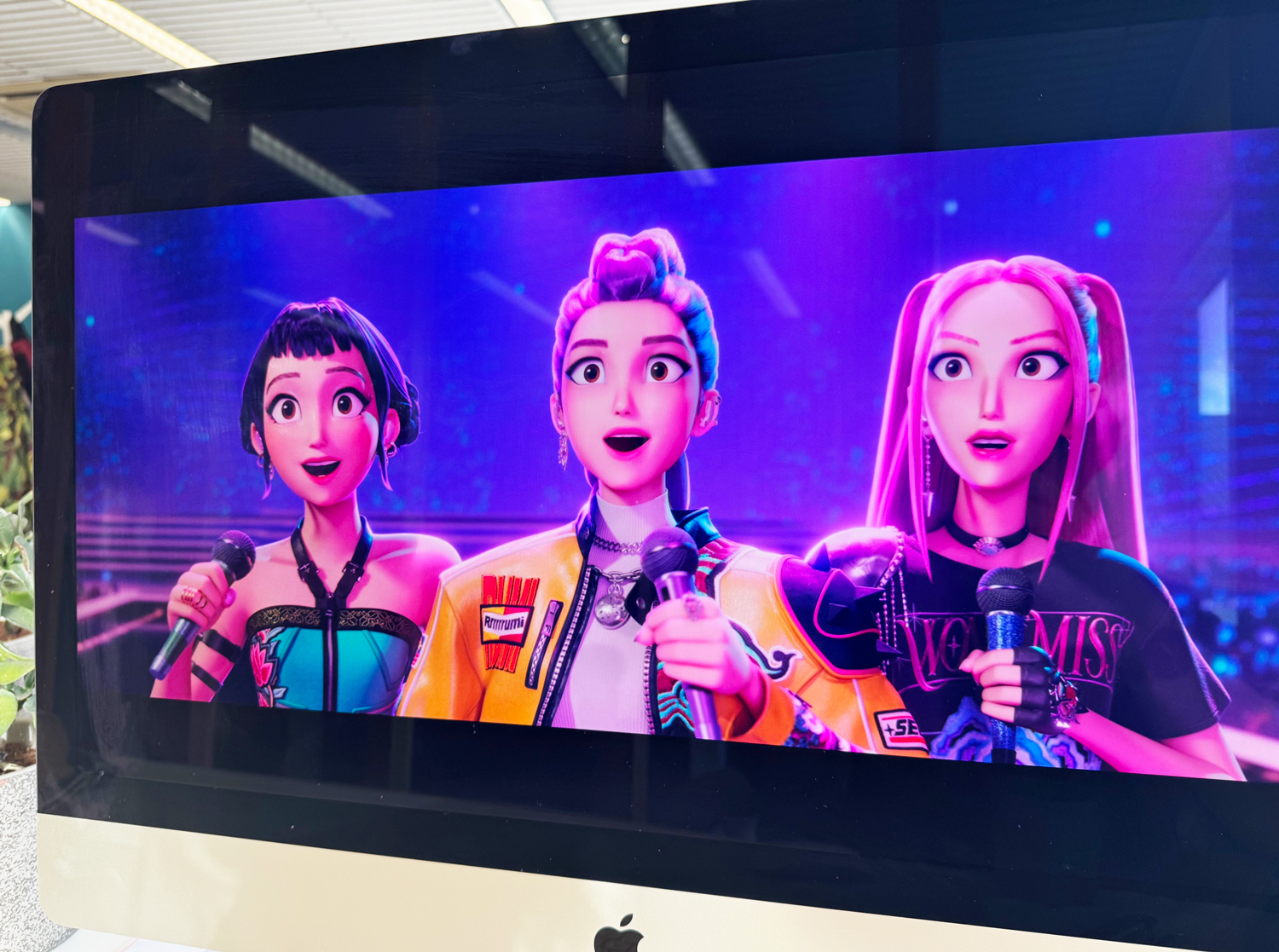
So my life is currently soundtracked by K-Pop Demon Hunters.
- Breakfast? Demon hunters.
- Dinner? Demon hunters.
- Bedtime? Definitely demon hunters.
There’s no escape – but honestly, I’m not mad about it. Somewhere along the way, I’ve become fully invested, living alongside my own small demon-hunter wannabe and absorbing the film’s energy by osmosis.
And as a digital learning designer, that’s when the familiar itch kicked in.
Because this kind of mass obsession doesn’t happen by accident. Netflix’s K-Pop Demon Hunters isn’t just successful because it looks good or sounds great (though it absolutely does). It works because it understands how people get hooked, stay engaged, and come back for more.
Which got me thinking… What if we stopped dismissing pop-culture franchises like this as “just entertainment” and instead looked more closely at the mechanics underneath?
So, in this post, I want to unpack what K-Pop Demon Hunters gets right about engagement, identity, and momentum, and explore how those same ideas can (and should) influence how we design digital learning experiences.
Because if a demon-hunting K-pop group can hold attention this effectively… there’s probably something in there worth shamelessly stealing.
1. Identity first, content second
K-Pop Demon Hunters doesn’t start by explaining how demon hunting works. It starts by showing us who these characters are.
Demon hunting is part of their identity, not a checklist of competencies.
What digital learning can learn from this
Too many learning experiences lead with content: modules, objectives, and information. But learners don’t commit to content. They commit to who they are becoming.
When learning is framed purely as knowledge transfer, motivation stays fragile. When learning is framed as identity development, engagement deepens. Learners persist because the learning feels personally meaningful, not just professionally required.
When learners see themselves in the role, effort stops feeling optional.
Design takeaway
- Frame learning as identity development (“becoming a practitioner,” not “completing training”)
- Use role-based language and scenarios
- Reinforce identity throughout the journey, not just at the end
2. Emotional stakes drive engagement
In the film, failure matters. Letting the team down matters. Losing control matters. The emotional stakes make every training moment feel meaningful.
Now, contrast that with many digital courses, where the worst outcome is… clicking “retry”.
What digital learning can learn from this
Low-risk learning is safe, but zero-stakes learning is forgettable.
When nothing meaningful is at risk, learners disengage emotionally. They may complete the course, but they rarely carry the learning forward.
Emotion is not the enemy of learning. It’s the engine.
Design takeaway
- Show real consequences of poor decisions (even simulated ones)
- Use scenarios where outcomes affect people, teams, or patients – not just scores
- Let learners feel tension, responsibility, and relief
3. Rhythm, pacing, and momentum
The franchise has a clear rhythm:
- Training
- Setback
- Adjustment
- Breakthrough
- Performance
There’s intensity, then recovery. Action, then reflection. Nothing drags, and nothing is rushed.
This rhythm is what keeps the story moving. Viewers are never stuck in one mode for too long, and emotional energy is managed with care.
Pauses aren’t wasted time too – they’re what make the breakthroughs possible.
What digital learning can learn from this
Learning isn’t a straight line, and it shouldn’t feel like one.
Yet many digital learning experiences are designed as uninterrupted stretches of content: watch, read, click, repeat. Even strong material can start to feel heavy when it’s delivered at a single, unchanging pace.
Good pacing keeps learners moving. Bad pacing makes even great content feel exhausting.
K-Pop Demon Hunters understands that momentum comes from variation, not speed.
Design takeaway
- Break long content into energetic, purposeful segments
- Alternate challenge with reflection
- Design for momentum, not endurance
4. Style is part of the message
The visuals, music, choreography, and fashion in K-Pop Demon Hunters aren’t decoration. They are the message.
Style signals:
- This matters
- This is intentional
- This is worth your attention
What digital learning can learn from this
Design communicates values before a single word is read.
Learners form an impression within seconds:
Is this worth my time?
Does this feel credible?
Does anyone care?
If learning looks disposable, learners will treat it that way.
Too often, visual design in learning is seen as “polish” – something nice to have if there’s time or budget left over. But K-Pop Demon Hunters shows us that style isn’t superficial; it’s how meaning is delivered.
Design takeaway
- Treat visual design as meaning, not polish
- Maintain consistent tone, visuals, and interaction patterns
- Make learning feel modern, thoughtful, and human
5. Transformation is the real reward
Perhaps this is the moment to question our increasing reliance on fully remote behaviours and whether By the end, the biggest payoff isn’t defeating demons, it’s seeing how the characters have changed:
- More confident
- More trusting
- More capable
- More grounded
The external victory matters, but it’s the internal shift that stays with you. That transformation is what sticks.
What digital learning can learn from this
Certificates don’t motivate. Growth does.
People stay engaged when they can feel themselves changing. When they notice their confidence rising, their judgement sharpening, or their thinking becoming more nuanced. That sense of personal evolution is far more powerful than any badge or score.
Design takeaway
- Reflect on “before vs after”
- Show how thinking, confidence, or judgement has evolved
- Measure progress over time, not just completion
6. Community creates retention
K-Pop Demon Hunters doesn’t survive on story alone – it thrives on fandom. Community keeps people engaged between releases, long after the credits roll.
Fans don’t just watch the film and move on. They talk about it, rewatch scenes together, share favourite moments, debate character choices, and build a shared language around it. The franchise becomes something people belong to, not just something they consume.
That sense of belonging is what sustains attention over time.
What digital learning can learn from this
A course might end, but learning shouldn’t. Content alone is rarely enough to keep people coming back.
In digital learning, we often design for completion: finish the module, pass the assessment, get the certificate. But once that moment passes, the learner is usually on their own again. No shared space. No continued conversation. No sense that their learning journey connects to anyone else’s.
K-Pop Demon Hunters shows us the opposite approach: community is the glue that holds engagement together.
Design takeaway
- Design for shared experience through learning groups or even light-touch peer visibility
- Create spaces for reflection and discussion, not just answers
- Extend the learning beyond the course with follow-up challenges or shared practice spaces
7. Rewatchability = Relearning
The film rewards repeat viewing. You notice new details. Emotional moments land differently. Understanding deepens.
That’s not accidental – it’s design.
The film is built to be revisited, not consumed once and forgotten.
In K-Pop Demon Hunters, the story doesn’t change – the viewer does. That’s why repeat viewing feels rewarding.
What digital learning can learn from this
Digital learning can work the same way when it’s designed to grow with the learner.
Understanding deepens with experience. What felt abstract at the start becomes meaningful once you’ve tried to apply it in the real world. When learners return to content later, they bring new questions, new challenges, and new perspective.
So, good learning should invite return visits. If learning only works once, it’s not finished.
Design takeaway
- Design content that reveals more with experience
- Support non-linear revisiting
- Enable just-in-time refreshers, not one-and-done journeys
Final thought
K-Pop Demon Hunters works because it understands something digital learning often forgets:
People don’t engage with information – They engage with identity, emotion, rhythm, style, transformation, and belonging.
The demons may be fictional, but the learning principles are very real.
If you’re rethinking a digital learning project, we’d love to explore it with you.
More eggtremely useful stuff...